 by
by 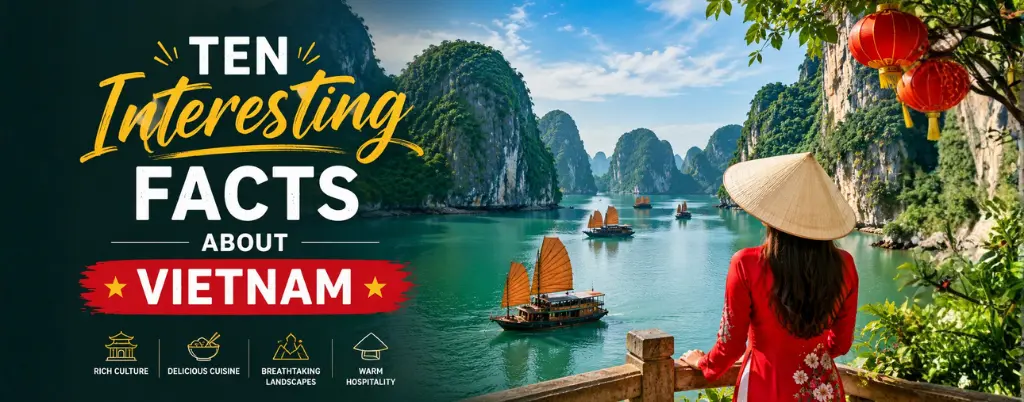
Vietnam is one of Southeast Asia’s most fascinating destinations. While many travelers know it for its scenic landscapes, street food, and affordable travel experiences, the country has far deeper stories hidden beneath its modern tourism image. From ancient traditions and unusual cultural practices to breathtaking natural wonders and historical resilience, Vietnam offers experiences that surprise almost every visitor. Whether you are planning your first trip or simply exploring Southeast Asian culture, these interesting facts about Vietnam will help you understand why the country continues to attract millions of travelers every year
1. Vietnam Is Home to One of the World’s Largest Cave Systems
One of the most interesting facts about Vietnam is that it houses some of the largest caves on Earth. The country’s underground world is massive, especially in Phong Nha-Ke Bang National Park.
The most famous cave is Son Doong Cave, discovered in 1991 and officially explored in 2009. It is considered the largest cave in the world by volume. The cave is so enormous that it contains its own ecosystem, underground river, clouds, and jungle.
Inside the cave, gigantic limestone formations rise like skyscrapers, creating landscapes that look almost unreal. Due to conservation efforts, only a limited number of travelers are allowed to visit each year, making it one of the most exclusive adventure experiences in Asia.
For adventure travelers, Vietnam is not just about beaches and cities — it is also a destination filled with hidden natural wonders.
2. Vietnam Has a Strong Coffee Culture That Rivals Europe
Most travelers expect Thailand to dominate Southeast Asian café culture, but Vietnam surprises many visitors with its deep coffee traditions. Vietnam is actually the second-largest coffee exporter in the world. Coffee is not just a beverage there — it is part of everyday life.
One of the most unique drinks is Vietnamese egg coffee, made with whipped egg yolk, sugar, and strong coffee. It sounds unusual, but the taste is creamy and rich, almost like dessert.
Street-side cafés are everywhere in cities like Hanoi and Ho Chi Minh City. Locals spend hours chatting over small cups of powerful coffee while sitting on tiny plastic stools along busy streets.
This café culture creates a slower social rhythm compared to many fast-paced cities around the world. Travelers often discover that simply sitting at a Vietnamese café becomes one of the most memorable parts of their trip.
3. Motorbikes Dominate the Roads
Traffic in Vietnam can feel chaotic to first-time visitors, but there is a system hidden inside the disorder.
Vietnam has tens of millions of motorbikes, making them the primary mode of transportation for most residents. In cities like Hanoi and Ho Chi Minh City, streets are packed with scooters carrying entire families, groceries, furniture, and sometimes even pets. Crossing the road in Vietnam becomes a skill of its own. Instead of waiting for traffic to stop completely, pedestrians move slowly and steadily while vehicles flow around them. It may look intimidating at first, but experienced travelers quickly realize that patience and consistency are more effective than hesitation.
This unique traffic culture reflects the country’s adaptability and energy.
4. Vietnamese Cuisine Is One of the Healthiest in the World
Another interesting fact about Vietnam is the global reputation of its cuisine. Vietnamese food is often considered one of the healthiest culinary traditions in the world.
Fresh herbs, vegetables, rice noodles, seafood, and grilled meats form the foundation of most meals. Heavy cream and excessive oil are used far less compared to many Western cuisines.
Popular dishes include:
– Pho (Vietnamese noodle soup)
– Banh Mi (Vietnamese sandwich)
– Goi Cuon (fresh spring rolls)
– Bun Cha (grilled pork with noodles)
Meals are typically balanced with sweet, salty, sour, spicy, and umami flavors working together.
Street food culture also plays a major role in daily life. Many of the best meals are served from small roadside stalls rather than luxury restaurants.
Food tourism has become one of Vietnam’s biggest attractions, with travelers specifically visiting the country to explore regional dishes and local cooking traditions.
5. Vietnam Has Over 3,000 Kilometers of Coastline
Vietnam stretches along the eastern edge of Southeast Asia, giving it an incredibly long coastline filled with beaches, fishing villages, and tropical islands. From the white sands of Da Nang to the dramatic limestone scenery of Ha Long Bay, the country offers a huge variety of coastal experiences.
Beach destinations like Phu Quoc and Nha Trang attract travelers looking for luxury resorts, snorkeling, and island adventures.
At the same time, quieter coastal towns still preserve traditional fishing lifestyles that have existed for generations.
Because the country spans multiple climate zones, travelers can often find pleasant beach weather somewhere in Vietnam during almost any season.
6. Ha Long Bay Contains Thousands of Limestone Islands
Among the most famous interesting facts about Vietnam is the natural beauty of Ha Long Bay.
This UNESCO World Heritage Site contains thousands of limestone islands rising from emerald-green waters. The landscape looks almost mythical, especially during sunrise or misty weather.
According to local legends, dragons descended into the sea and created the islands by striking the mountains with their tails.
Today, travelers explore the bay through cruises, kayaking tours, floating villages, and cave visits.
While tourism has increased significantly in recent years, Ha Long Bay still remains one of the most visually spectacular locations in Asia.
For many visitors, it becomes the highlight of their entire Vietnam journey.
7. Vietnam Has 54 Recognized Ethnic Groups
Vietnam is far more culturally diverse than many travelers realize.
Although the Kinh people form the majority population, the country officially recognizes 54 different ethnic groups. Each community has its own traditions, clothing styles, languages, and cultural practices.
Northern mountain regions such as Sapa are especially known for their ethnic diversity. Travelers can meet communities like the Hmong, Dao, and Tay people while trekking through rice terraces and remote villages.
These communities preserve traditional weaving, farming, and handicraft techniques that have been passed down for centuries.
This cultural richness gives Vietnam a far deeper identity than the modern urban image often shown online.
8. The Vietnamese Language Uses the Latin Alphabet
Unlike many Asian languages that use entirely separate writing systems, modern Vietnamese is written using a modified Latin alphabet.
This system, known as Quoc Ngu, was influenced by Portuguese and French missionaries during earlier centuries. The language uses additional accents and tone marks, which are extremely important because Vietnamese is tonal. A single word can have multiple meanings depending on pronunciation.
For travelers, this makes reading signs and menus easier compared to destinations with unfamiliar scripts.
However, pronunciation still remains challenging for most foreign visitors because tone changes can completely alter meanings.
9. Vietnam Has One of the Fastest Growing Tourism Industries in Asia
Tourism in Vietnam has expanded rapidly over the past decade.
The country attracts visitors with its affordability, natural beauty, historical sites, and food culture. Compared to many international destinations, Vietnam still offers excellent value for travelers.
Luxury hotels, backpacker hostels, eco-resorts, and adventure tourism options continue to grow across the country.
Cities like Hanoi and Ho Chi Minh City combine modern development with preserved history, while destinations such as Hoi An maintain charming old-world architecture.
Travelers searching for a complete Southeast Asian experience often find that Vietnam delivers the best balance between culture, scenery, affordability, and adventure.
If you are planning your next international holiday, this detailed Vietnam travel guide from Mayur Suvidhaa Travels can help simplify your journey planning.
10. Vietnam’s History Is Marked by Extraordinary Resilience
One of the most important interesting facts about Vietnam is the resilience of its people.
Throughout history, Vietnam has faced invasions, colonial rule, wars, and political struggles. Despite these challenges, the country rebuilt itself with remarkable speed and determination.
Today’s Vietnam is youthful, energetic, and rapidly modernizing while still respecting its traditions.
Museums, historical landmarks, and preserved war sites across the country help visitors understand the depth of Vietnam’s historical journey.
However, modern Vietnam is not defined only by conflict. It is also defined by entrepreneurship, hospitality, creativity, and cultural pride.
This balance between history and progress is one of the reasons travelers often leave Vietnam with a deeper appreciation for the country than they expected before arriving.
Why Vietnam Should Be on Your Travel Bucket List
Vietnam offers something that many destinations struggle to provide — variety without losing authenticity.
You can experience:
– Ancient temples
– Modern cities
– Tropical beaches
– Mountain villages
– World-famous street food
– Rich history
– Adventure tourism
– Luxury resorts
– Cultural traditions
All within a single country.
The country appeals to solo travelers, couples, families, photographers, food lovers, and adventure seekers alike.
Unlike destinations that feel overly commercialized, Vietnam still retains strong local identity and cultural character in many regions.
That authenticity is what keeps travelers returning again and again.
These interesting facts about Vietnam reveal why the country has become one of the most exciting travel destinations in the world. Beyond the beaches and famous landmarks lies a country filled with history, resilience, diversity, and unforgettable experiences.
Whether you want to cruise through limestone islands, explore ancient towns, taste world-famous street food, or simply experience a different way of life, Vietnam offers far more depth than most travelers expect.
For anyone planning a Southeast Asian adventure, Vietnam deserves far more than a quick visit — it deserves time, curiosity, and exploration.
These interesting facts about Vietnam reveal why the country has become one of the most exciting travel destinations in the world. Beyond the beaches and famous landmarks lies a country filled with history, resilience, diversity, and unforgettable experiences.
Whether you want to cruise through limestone islands, explore ancient towns, taste world-famous street food, or simply experience a different way of life, Vietnam offers far more depth than most travelers expect.
For anyone planning a Southeast Asian adventure, Vietnam deserves far more than a quick visit — it deserves time, curiosity, and exploration.
Book Your Trip Now ✈️🇻🇳
Schedule a call to plan your Vietnam escape in 2026 and unlock the best early travel deals. From the vibrant streets of Hanoi and the breathtaking beauty of Ha Long Bay to the lantern-lit charm of Hoi An and the energy of Ho Chi Minh City—experience Vietnam beyond the ordinary.
Book your seamless, all-inclusive journey with Mayur Suvidha Travels LLP and travel without the planning stress.
Follow us on Instagram for exclusive offers, curated itineraries, and insider travel inspiration.
Frequently Asked Questions (FAQs)
What is Vietnam famous for?
Most tours and travels agencies provide complete travel solutions including flight bookings, hotel reservations, holiday packages, visa assistance, travel insurance, and customized itineraries for domestic and international trips.
Is Vietnam a good destination for first-time international travelers?
Yes. Vietnam is considered one of the best destinations for first-time international travelers because it offers affordable accommodation, budget-friendly food, diverse attractions, and a strong tourism infrastructure.
What is the best time to visit Vietnam?
The best time depends on the region. Generally, October to April is considered ideal for most travelers because the weather is cooler and drier in many parts of the country.
Is vegetarian food easily available in Vietnam?
Yes. Vegetarian food is widely available, especially in tourist areas and major cities. Many restaurants offer vegetarian or vegan versions of traditional Vietnamese dishes using tofu, vegetables, rice noodles, and herbs.
Is Vietnam expensive for tourists?
No. Vietnam is considered one of the most affordable travel destinations in Asia. Travelers can find budget hotels, inexpensive local food, and affordable transportation compared to many international destinations.